The Harmony of Aesthetics and Biomechanics: Porcelain Laminate and Digital Smile Design
Aesthetic dentistry is not a field that aims solely to obtain whiter or more even-looking teeth. At the foundation of a successful aesthetic treatment, facial anatomy, lip movements, gum health, jaw closure, and the preservation of natural tooth tissue are evaluated together. For this reason, modern smile design is a personalized treatment approach that addresses aesthetic appearance and functional balance within the same plan.
Digital smile design, on the other hand, is an important planning method that makes this process more predictable. The patient’s facial proportions, lip line, tooth form, gum levels, and aesthetic expectations are analyzed with digital data. Thanks to intraoral scanners, photographic records, and the necessary radiological imaging, not only the individual appearance of the teeth but also the relationship they establish with the face as a whole is evaluated. In this way, the targeted smile can be planned more clearly before treatment begins.
What Is Digital Smile Design?
Every patient’s facial structure, age, characteristic appearance, lip movement, gum visibility, and natural tooth alignment are different. For this reason, digital smile design must also be prepared on a personalized basis.
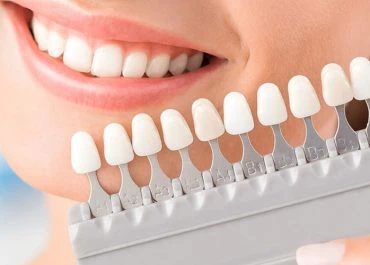
In this process, the length, width, and form of the teeth, the midline relationship, lip support, and gum levels are analyzed together. Tooth color, form, and alignment—referred to as white aesthetics—are evaluated together with gum health and gum levels, defined as pink aesthetics. This is because a natural and long-lasting aesthetic result is possible not only through the appearance of the teeth, but also through the harmony they establish with the surrounding tissues.
One of the most important advantages of digital planning is the preview stage called a mock-up. Thanks to this application, the patient can temporarily experience the designed smile in their own mouth before the final restorations are made. In this way, the length and form of the teeth and the overall smile expression can be evaluated before treatment begins.
What Is a Porcelain Laminate?
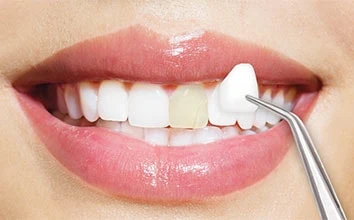
Porcelain laminates are thin porcelain restorations applied to the front surface of the teeth. Also popularly known as leaf porcelain, this application is preferred especially for correcting problems of color, form, size, and slight alignment in the anterior teeth.
In traditional veneer treatments, a greater amount of reduction may need to be done all around the tooth. In porcelain laminate treatment, however, in suitable cases only a very limited preparation is done on the front surface of the tooth. In this way, the natural tooth tissue can largely be preserved. In certain selected cases, planning can also be done with techniques called prepless or non-prep, without any reduction at all.
Thanks to their light transmittance and surface properties close to those of natural tooth enamel, porcelain laminates offer strong results in aesthetic terms. With correct material selection, correct color planning, and precise bonding techniques, a balanced and aesthetic appearance that is difficult to distinguish from natural teeth can be obtained.
In Which Cases Is Porcelain Laminate Preferred?
Porcelain laminate treatment may not be suitable for every patient; however, with correct indications, it can provide successful results in both aesthetic and functional terms. Closing gaps between teeth, permanent discolorations that cannot be removed by whitening, form and size irregularities, broken or worn anterior teeth, slight crowding, and aesthetic problems related to old restorations are conditions that can be evaluated with porcelain laminates.
That said, in situations such as advanced crowding, active gum disease, major loss of substance, insufficient enamel support, or uncontrolled teeth grinding, different treatment options may come to the fore. For this reason, the decision for porcelain laminates must always be made as a result of a detailed clinical examination and personalized planning.
Dr. Aylin Yalçın, one of the founders of Dentram, Orthodontics Specialist and aesthetic Dentist, expresses the importance of a tissue-preserving approach and digital predictability in aesthetic restorations as follows:
“In modern dentistry, our fundamental clinical principle is the minimally invasive approach; that is, preserving the patient’s natural tooth tissue to the maximum extent. Laminate restorations are highly biocompatible aesthetic materials that we apply without compromising the structural integrity of the tooth. Thanks to digital smile design, before starting treatment, our patient can experience their final smile in their own mouth with mock-up preview templates. This approach is an important clinical standard that makes aesthetic processes more predictable.”
How Does the Process Proceed at Dentram?
At Dentram, the digital smile design and porcelain laminate process begins with listening to the patient’s expectations and a detailed intraoral examination. The current condition of the teeth, gum health, closure relationship, jaw movements, and face-tooth harmony are evaluated together. Most patients with advanced aesthetic problems are evaluated together with a Prosthodontics Specialist, a Maxillofacial Surgery Specialist, and an Orthodontics specialist, and the best solution for the patient is decided upon with a multidisciplinary approach.
In cases deemed necessary, intraoral scans, photographs, and radiological imaging records are taken. A personalized smile design is prepared based on these data. The design is evaluated in the mouth with a preview; then minimal preparation is done on the teeth deemed appropriate, and the porcelain laminates are produced on a personalized basis. After the color, form, and lip support are checked at the try-in stage, the restorations are bonded to the tooth with special adhesive systems.
After treatment, regular oral care, use of dental floss, avoiding breaking hard foods with the front teeth, and regular dental check-ups are important for the longevity of porcelain laminates. In patients with a habit of clenching or grinding their teeth, a protective night guard may be recommended.
Porcelain laminate and digital smile design are a modern treatment approach that brings together aesthetic appearance with functional balance. At Dentram, this process is carried out with personalized planning that aims to preserve natural tooth tissue, achieve an aesthetic appearance in harmony with the facial features, and ensure long-term biological compatibility.