
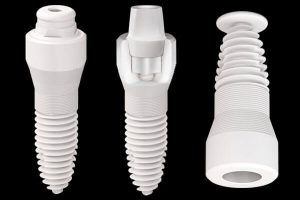
Zirconia implants are metal-free, white-colored artificial tooth roots applied to replace missing teeth. Produced from zirconia ceramic, these implants have been developed as an alternative to classic titanium implants. This material stands out particularly for individuals with metal sensitivities, cases with high aesthetic expectations, and situations where a more natural appearance is desired.
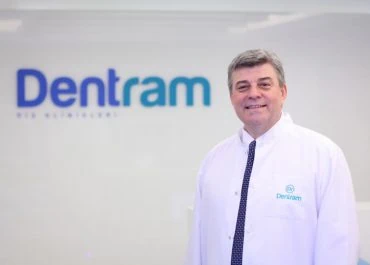
Oral and Maxillofacial Surgery Specialist Prof. Dr. Serhat Yalçın, one of our founders at Dentram, states that zirconia-ceramic implants are highly advanced today in terms of stability, bone integration, and prosthetic compatibility, and have become an accepted, rational option when compared to titanium.
Zirconia-ceramic implant treatments applied at Dentram aim not only to replace missing teeth but also to achieve long-term, biomechanically stable results that are harmonious with the surrounding tissues. During the treatment process, aesthetics, function, and biological compatibility criteria are evaluated together to create a scientifically personalized plan.
What is a Ceramic Zirconia Implant?
A zirconia-ceramic implant is a metal-free artificial tooth root made from high-strength ceramic, applied to replace missing teeth. Its raw material, zirconium oxide, is one of the most cellularly biocompatible materials that has been safely used in medical and dental fields for a long time.
Zirconia implants are designed not just as mechanical carriers or root replacements, but with microscopic interactions with surrounding tissues in mind. The surface structure that comes into contact with the gums is developed to support soft tissue adaptation and osseointegration (attachment to the bone). This feature directly contributes to maintaining aesthetic and biological stability around the implant for many years.
Unlike traditional titanium implants, zirconia implants are white. As a result, especially in the anterior (front) tooth region, even with thin gingival biotypes, aesthetic complication risks such as discoloration, graying, or dark reflections are completely minimized.
Why Should Zirconia-Ceramic Implants Be Preferred?
The preference for zirconia-ceramic implants is based on the combined evaluation of aesthetics, immunological (biological) compatibility, and long-term tissue health.
Metal-Free, Biocompatible Structure
Zirconia implants are 100% metal-free. Thanks to this feature, they are the safest solution regarding metal ion release in the mouth, galvanic interactions that may affect the sense of taste, and toxic or allergic reactions reported in some patients. In the biological dentistry approach, the use of inert materials fully compatible with the body’s flora is always a priority.
High Aesthetics and Color Stability
The white color of zirconia-ceramic implants, mimicking a natural tooth root, provides a flawless optical transition at the gum level. Even if age-related or anatomical gingival recession occurs over time, aesthetically displeasing metallic reflections do not appear. This offers an undeniable advantage, especially for anterior tooth restorations located in the smile line.
Tissue-Friendly Surface and Maximum Hygiene Advantage
The smooth surface properties of zirconium significantly reduce bacterial plaque retention compared to traditional alloys. This greatly contributes to maintaining the long-term health of soft tissues by lowering the risk of peri-implantitis (inflammation around the implant), which is one of the leading causes of implant failure.
Corrosion Resistance and Material Stability
Zirconium oxide ceramics do not chemically react with acidic or basic oral fluids. Its highly corrosion-resistant structure and biomechanical fracture toughness help the material maintain its structural stability and chewing function for many years, just like the first day.
Prof. Dr. Serhat Yalçın: “The defining criterion for us when choosing a zirconia implant is not solely aesthetics, but how the gum and bone tissues respond to this material at a cellular level in the long term.”
Who is a Suitable Candidate for Zirconia Implants?
Zirconia implant treatment is not a standard procedure applied automatically to every patient. Suitability is determined by the physician following a detailed clinical examination, 3D tomographic analysis, and biomechanical evaluation. Zirconia implants are frequently considered the primary choice for patient groups with the following clinical profiles:
- Those with Metal Sensitivities: Individuals with a proven allergy or immunological sensitivity history to metal-containing dental materials, including titanium.
- High Aesthetic Expectations: Patients needing restorations, particularly in the anterior (front) tooth region, aiming for a flawless, natural smile line.
- Cases with a Thin Gingival Biotype: Situations where the gum tissue is anatomically thin, aiming to completely eliminate the risk of gray color reflection that titanium implants might cause.
- Adopters of Biological and Holistic Medicine: Patients who do not want any metal burden in their bodies and prefer to be treated with materials offering the highest biocompatibility.
- Those Targeting Long-Term Tissue Health: Individuals aiming to keep the form and health of the gums around the implant free from periodic risks.
Furthermore, in some complex posterior region cases with advanced jawbone loss, excessively high chewing forces due to reasons like bruxism (teeth grinding), or in patients with systemic health issues, different implant options may be brought to the agenda at the physician’s discretion.
Prof. Dr. Serhat Yalçın: “When deciding on the type of implant, the patient’s aesthetic expectations, as well as the available bone volume, density, and the biomechanical force distribution in the mouth must absolutely be taken into consideration.”
How Does the Zirconia Implant Treatment Process Proceed?
Zirconia-ceramic implant treatment is a scientifically multi-staged process, customized in light of digital data, leaving no room for coincidence. It consists of the following steps:
Examination and Digital Planning
In the first stage of treatment, a comprehensive intraoral examination is performed. Using three-dimensional imaging (CBCT) technology, anatomical structures such as jawbone volume, quality, nerve pathways, and sinus cavities are analyzed in detail. Thanks to this digital planning, the position, insertion angle of the implant, and its biomechanical relationship with surrounding tissues are simulated flawlessly before the operation even begins.
Surgical Application
Zirconia-ceramic implants are placed into the socket prepared in the jawbone with a completely painless surgical protocol under local anesthesia. In suitable cases where bone quality and volume are sufficient, implant application can be safely planned in the same session as the extraction of the problematic tooth (immediate implantation).
Healing and Bone Integration
A specific physiological period is required for the implant to biologically integrate with the jawbone at a cellular level. While this period varies depending on the patient’s bone density, the region where the implant is placed (upper or lower jaw), and overall cellular healing capacity, it is a critical stage for permanent stabilization.
Prosthesis and Functional Evaluation
After bone integration is successfully completed and confirmed by clinical tests, the superstructure (prosthesis) process to be placed on the implant begins. Aesthetic expectations, jaw closure function, and the balance of occlusal (chewing) forces are evaluated with engineering precision. Custom porcelain or zirconia restorations are prepared in a laboratory environment and permanently cemented.
Prof. Dr. Serhat Yalçın: “The prosthetic stage is the most critical phase that crowns the implant’s success within the bone and determines its mechanical behavior in the mouth, which will last for many years.”
Differences Between Zirconia-Ceramic Implants and Titanium Implants
The fundamental rational differences that separate these two advanced implant types in terms of material engineering, optical effect, and immunological compatibility are:
- Material Structure: While titanium implants are produced from medical-grade metal alloys, zirconia implants have a zirconium oxide-based high-tech ceramic structure and are 100% metal-free.
- Aesthetic Results: With titanium implants, a “gray reflection” risk may arise over time, especially in patients with thin gums or age-related gum recession. The white color and light transmittance of zirconia-ceramic implants completely eliminate this aesthetic risk, offering a natural tissue appearance.
- Biological Compatibility: In biological dentistry, the goal is to zero out the toxic and metal burden in the body. With their smooth surfaces that delay plaque formation and non-metal-ion-releasing structures, zirconia implants are one of the strongest treatment alternatives for this holistic approach.
Zirconia Implants and the Biological Dentistry Approach at Dentram
At Dentram, implant surgery is not treated with the superficiality of merely “placing a mechanical root to replace a missing tooth.” The patient’s general health status, immune system profile, temporomandibular joint (TMJ) dynamics, existing other restorations, and lifelong expectations are evaluated in a rational totality.
- Treatment plans are created through multidisciplinary consultation consisting of a surgeon, orthodontist, and prosthodontist,
- The most up-to-date digital diagnostic (3D scanning and tomography) tools are utilized in diagnosis and operational planning,
- The surgical process and prosthetic (superstructure) stages are treated as an inseparable scientific whole from the very beginning of the treatment.
Prof. Dr. Serhat Yalçın: “For us, a successful implant treatment is not only about the results on radiographic (X-ray) images but also achieving functional results where the patient feels flawless in terms of chewing, speaking, and self-confidence in their daily life.”
Zirconia Implant Prices
The financial cost of zirconia-ceramic implant treatments varies depending on the patient’s jaw anatomy, the number of missing teeth, whether advanced surgical procedures like sinus lifting or bone grafting are needed, and the type of superstructure prosthesis planned. Following a comprehensive initial examination and radiographic analysis at Dentram, a detailed treatment plan based on rational data is created and presented transparently to our patients.
Frequently Asked Questions
Is a zirconia implant suitable for everyone?
The clinical suitability of zirconia implants is determined by the physician after detailed radiographic (3D tomography) and biomechanical analyses. Factors such as sufficient bone volume, jaw joint dynamics, and the patient’s specific chewing force distribution directly affect the long-term success of this material. Therefore, instead of being a standard application for every case, it is a personalized treatment protocol preferred for patients with appropriate anatomical and biological foundations.
What is the lifespan of zirconia implants?
Thanks to their high biocompatibility and superior corrosion resistance against oral fluids, zirconia implants have the potential to maintain their structural integrity for a lifetime. However, the main factors determining the clinical lifespan of the treatment are the health of the bone and gum tissues surrounding the implant, the patient’s daily oral hygiene routine (brushing and interdental cleaning), and uninterrupted periodic physician check-ups. When these conditions are met, zirconia implants provide permanent chewing function.
Do zirconia implants cause allergies?
Zirconium oxide ceramic is an immunologically completely inert (neutral) material due to its 100% metal-free structure. Thanks to this biocompatible feature, it absolutely does not cause galvanic reactions or metal ion release in the body. It is scientifically the most reliable, tissue-friendly treatment alternative for individuals with a proven or potential allergy to titanium or other dental alloys.
How is the healing process?
The healing process post-surgery is quite comfortable as it is performed with minimally invasive (minimum tissue trauma) techniques thanks to 3D digital planning. Mild edema and sensitivity that may occur within the first few days post-operation are quickly brought under control with standard medical protocols and cold compresses. Our patients can generally return to their routine professional and social lives without restrictions the day after the operation.
Are zirconia implants used only in the anterior region?
While zirconia implants are frequently preferred in anterior (front) aesthetic regions due to their optical properties mimicking natural teeth, they are not limited to this area alone. Thanks to their developed high biomechanical and fracture resistance, they are also applied in posterior (back) chewing regions with high clinical success rates. The region where the implant will be used is decided by the physician by analyzing the patient’s bone density and jaw force.