A small gap between the teeth, a chipped corner, a difference in colour or uneven tooth lengths can affect the overall appearance of a smile. Two of the treatments most often considered for these kinds of aesthetic problems are bonding and porcelain veneers.
Both treatments can be used to improve the colour, shape and overall appearance of the teeth. However, they differ in terms of the material used, the application process, how much the tooth tissue is altered and how long they last. For this reason, there is no single answer to the question “Which one is better?” that applies to everyone. The right method is determined by the extent of the problem, oral health, the bite relationship and the patient’s expectations.
What Is Composite Veneer/Bonding?
Composite veneers, or bonding, involve applying tooth-coloured composite filling material to the tooth surface and shaping it. The material is placed directly on the tooth in the mouth, shaped by the dentist and hardened with a special light. In most cases, the procedure can be carried out without any reduction of the tooth tissue or with very limited preparation. The fact that it can usually be completed in a single session is one of the main advantages of bonding.
Bonding may be preferred in the following situations:
- A small part of a tooth has broken off
- Limited gaps between the front teeth
- Slight irregularities along the edges of the teeth
- One or more teeth look shorter than the others
- Minor shape and symmetry problems
- Limited colour differences
- Replacing old aesthetic fillings
Over time, composite material can be affected by tea, coffee, smoking and coloured foods. Small chips may also occur with habits such as biting hard objects or clenching the teeth. On the other hand, bonding restorations are generally easier to repair and reshape when needed.
What Are Porcelain Veneers?
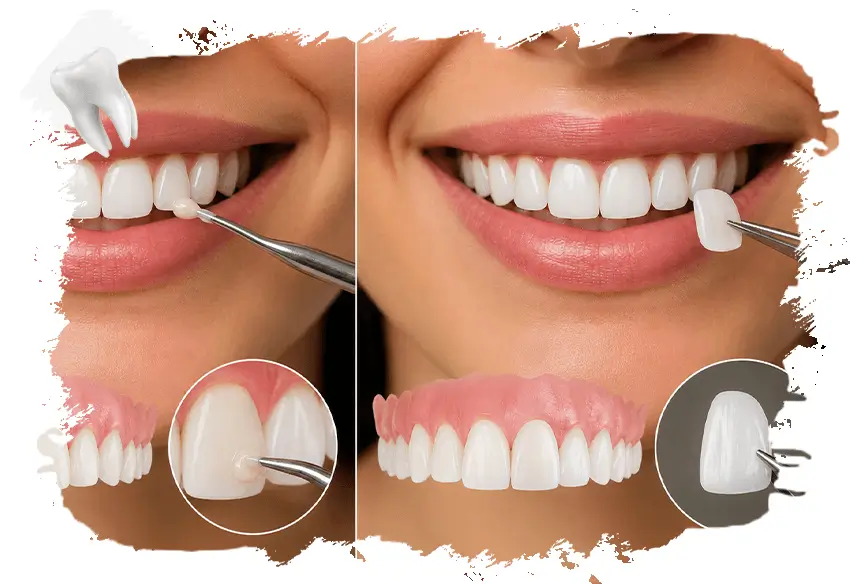
Porcelain veneers are thin, custom-made ceramic restorations bonded to the front surface of the teeth. In this treatment, also known as leaf porcelain, the form and colour of the teeth and their harmony with the face are determined through digital planning and laboratory work. In suitable cases, only very limited preparation is carried out on the front surface of the tooth. In some patients, depending on the tooth structure, no-prep veneers may also be considered. However, not every tooth is suitable for no-prep veneers.
Porcelain veneers may be considered particularly in the following situations:
- Marked discolouration of several front teeth
- Stains that cannot be lightened sufficiently with whitening
- Widespread shape and size mismatches
- Worn or broken front teeth
- Noticeable gaps between the teeth
- A more comprehensive redesign of the smile line
- The wish for a more permanent aesthetic change across several teeth
A porcelain surface is more resistant to staining than composite material. Thanks to a translucency close to that of natural tooth enamel, a vibrant and natural look can be achieved when it is planned correctly. However, porcelain veneers require a laboratory stage and involve a longer treatment process than bonding.
Treatment Should Be Chosen According to the Tooth and Age, Not the Material
Dentram co-founder and orthodontist Dr. Aylin Sezen Yalçın explains that, when choosing between bonding, composite veneers and porcelain veneers, the patient’s age matters as well as preserving natural tooth tissue:
“In aesthetic treatments, we do not make our decision based only on which material the patient wants. We evaluate the current structure of the tooth, how much intervention it needs and the patient’s age together. Preserving natural tooth tissue as much as possible is our priority, especially in young patients. For example, in a 20-year-old patient, porcelain veneers are often not our first choice. With composite veneers, which can be applied without any reduction of the tooth, we can choose a more conservative approach that is reversible in most cases. Once the patient has embraced this new form and smile, considering porcelain veneers later on also becomes more predictable. Our main aim is to preserve natural tooth tissue in the long term as much as to meet aesthetic expectations.”
Which One Is Preferred for Which Aesthetic Problem?
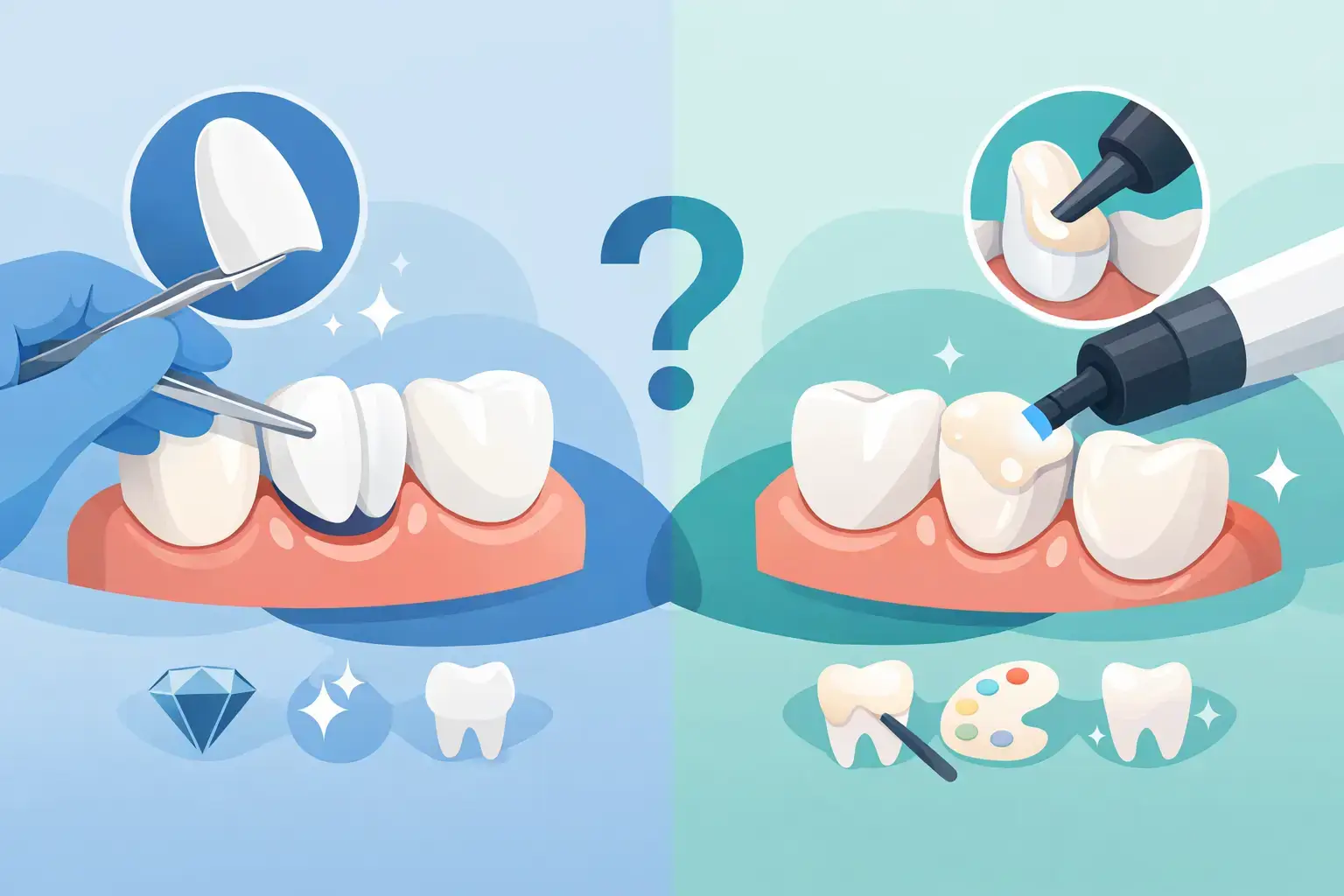
If there is a small chip, a slight gap or an uneven edge on a single tooth, bonding can be a more conservative and practical option. The fact that it can often be completed in a single session and requires minimal intervention on natural tooth tissue is an advantage for patients who want small changes.
In younger patients, when the form of several teeth needs to be corrected, composite veneers can be one of the first options. In the Dentram approach, treatments that are as reversible as possible and that preserve tooth tissue are preferred, especially for patients in their 20s. Because composite veneers can be applied in most cases without reducing the tooth surface, the possibility of switching to a different treatment option in later years is also preserved.
Composite veneers can also give the patient a kind of long-term aesthetic trial. If porcelain veneers are chosen at a later age, after the patient has experienced the new tooth form, size and smile line in daily life, expectations and the intended design can be defined much more clearly.
In suitable older patients, where the colour, length and form of several teeth need to be changed more comprehensively and where aesthetic expectations and long-term material stability come to the fore, porcelain veneers may be considered. Porcelain restorations stand out for their ability to keep their colour and surface characteristics for a long time, especially in cases where the entire smile line is redesigned.
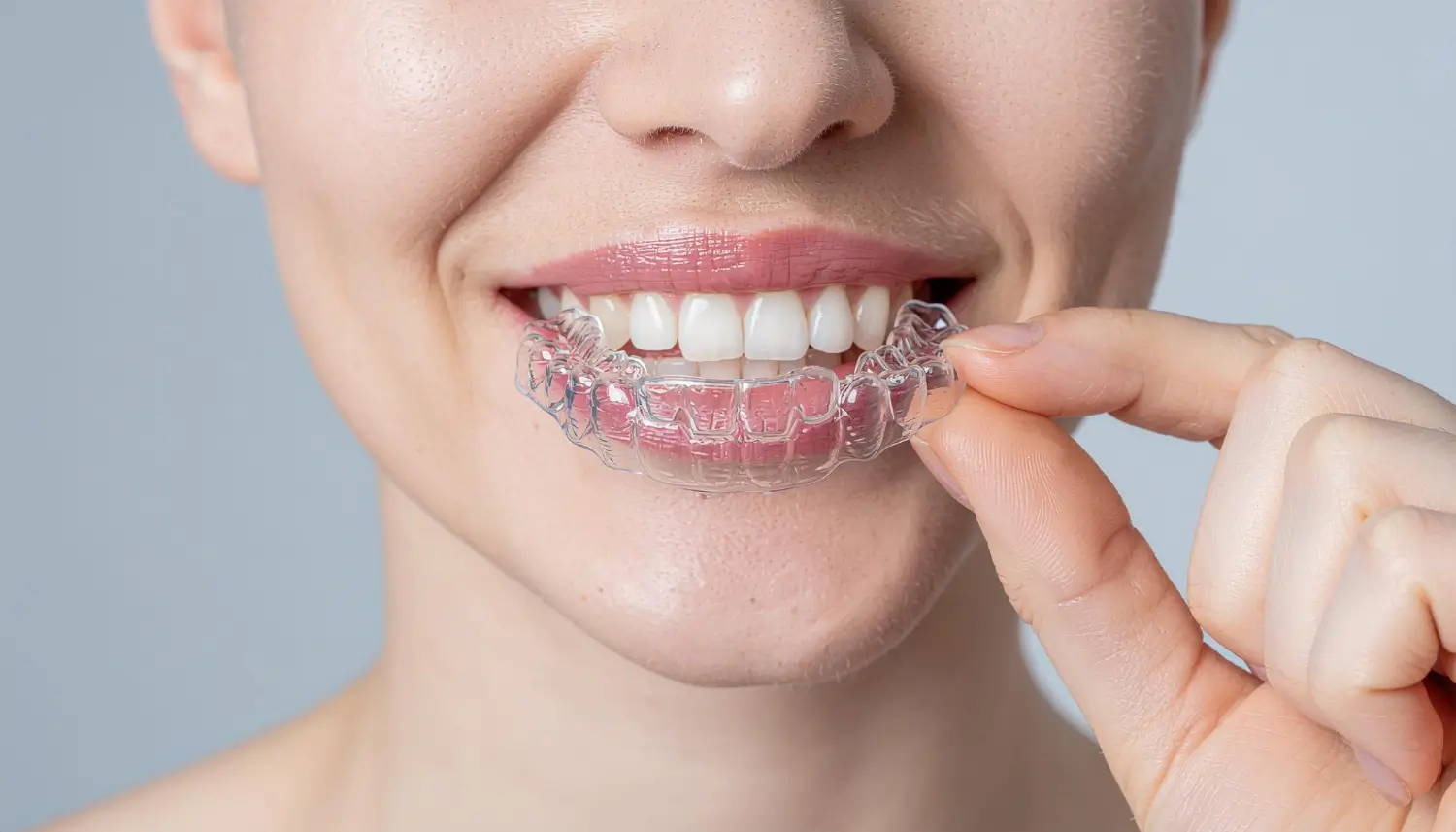
However, the appearance of the aesthetic problem or the patient’s age alone is not enough to make a decision. The amount of tooth enamel, existing fillings, decay, gum health, bite forces and teeth-clenching habits should also be evaluated together. In patients with severe crowding, orthodontic treatment may be recommended first instead of bonding, composite veneers or porcelain veneers. For patients who clench their teeth, a night guard may be planned to protect the restorations.
What Is Checked Before Treatment? The Treatment Process at Dentram
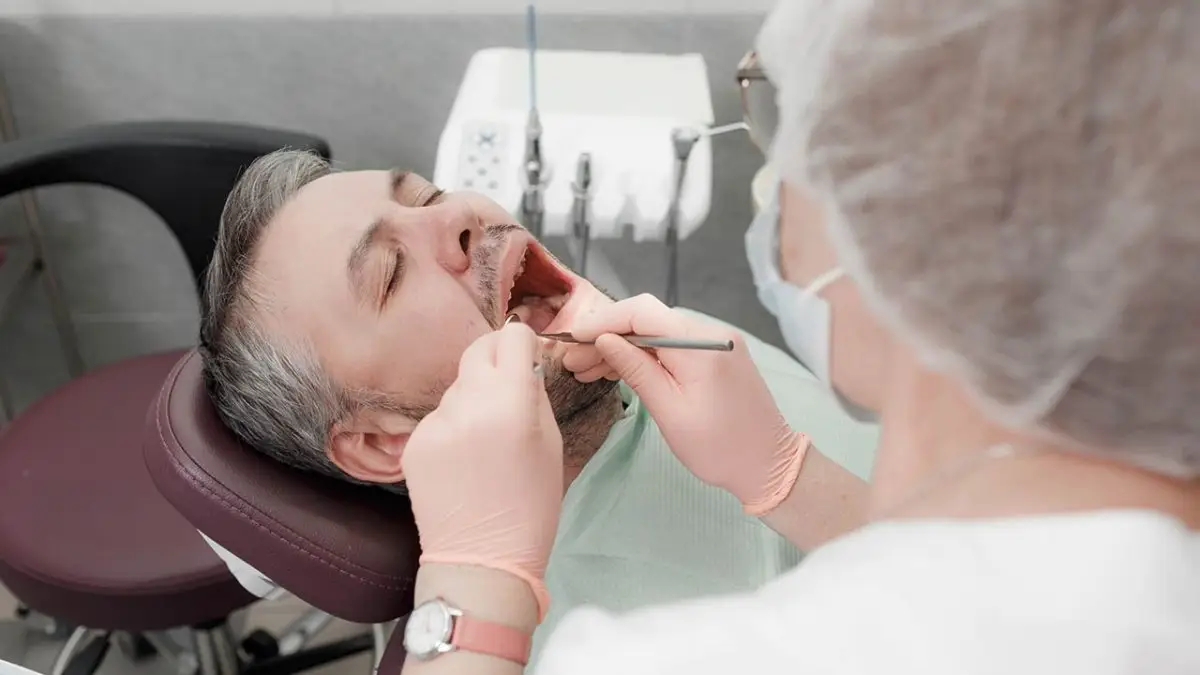
Before bonding or porcelain veneers, any decay and active gum disease need to be treated. Gum levels, the bite, lip movements and facial proportions are also included in the aesthetic planning.
At Dentram, the process begins with a clinical examination, photographic records, a digital intraoral scan and any necessary radiological assessments. In cases where porcelain veneers are being considered, the designed tooth forms can be evaluated in the mouth with a trial known as a mock-up, prepared from a digital smile design. This way, before any permanent procedure, the patient can see how the planned change harmonises with their face and smile.
Bonding and porcelain veneers can offer different solutions to the same aesthetic problems. Bonding may come to the fore for small and limited changes, while porcelain veneers may stand out for more comprehensive changes to colour, form and the smile line. The final decision should be made after a personalised assessment that preserves natural tooth tissue.
At Dentram, aesthetic dental treatments are planned by evaluating the current structure of the teeth, facial features, gum health and functional needs together. To find out whether bonding or porcelain veneers are right for your smile, you can book an assessment appointment with Dentram’s specialist dentists.