Clear aligner treatment moves the teeth gradually into their ideal positions using controlled forces planned in a digital environment. However, finishing the last aligner does not mean that every stage of orthodontic treatment is over. For the teeth to hold their new positions, a follow-up phase known as retention treatment is required.
If retention treatment is not carried out, or is not continued as the orthodontist recommends, the teeth may start to move again. This condition, called “relapse” in orthodontics, means that the teeth partially return to their previous positions or that new alignment changes develop over time. For this reason, the success of clear aligner treatment depends as much on wearing a retainer after treatment as it does on the active tooth movement.
Why Do Teeth Move After Clear Aligner Treatment?
During orthodontic treatment, teeth do not move only through their visible crowns. The periodontal ligaments around the roots and the jawbone also adapt biologically to the forces applied. Once the teeth reach their new positions, it takes time for these tissues to remodel and settle into balance. In the early period after active treatment, the fibres surrounding the teeth may still tend to pull them back towards their former positions. Chewing forces, tongue and lip pressure, clenching habits and the bite relationship can also affect the position of the teeth.
Moreover, teeth never stay completely still throughout life. With age, natural changes can occur in the jaw structure, the soft tissues and the way the teeth contact each other. Retention treatment should therefore be seen not as a temporary measure covering the first few months, but as a process that protects the result of treatment in the long term.
What Is Retention Treatment?
Retention treatment is the phase of treatment aimed at preserving the tooth positions achieved with clear aligners or fixed orthodontic treatment. During this period, fixed or removable protective appliances called retainers are used.
Unlike active clear aligners, a retainer is not used to move the teeth to a new position, but to keep them where they are. The choice of appliance depends on the type of crowding at the start, the tooth movements performed, the bite relationship, the patient’s age and oral hygiene habits. While a single retainer may be enough for some patients, a combination of fixed and removable appliances may be recommended, especially in cases with a high risk of relapse.
Dentram co-founder and orthodontist Dr. Aylin Sezen Yalçın describes the retention period as an integral part of orthodontic treatment:
“In clear aligner treatment, moving the teeth to the planned position is the active stage of the process. However, the biological stability of the treatment comes from the tissues accepting this position and from maintaining it over the long term. That is why we do not see retention treatment as an optional extra, but as a continuation of orthodontic planning. We create a personalised retainer protocol by evaluating the patient’s initial tooth alignment, the movements performed and the bite dynamics. Regular wear and clinical follow-up play a decisive role in preserving the result achieved.”
Which Types of Retainers Are Used?
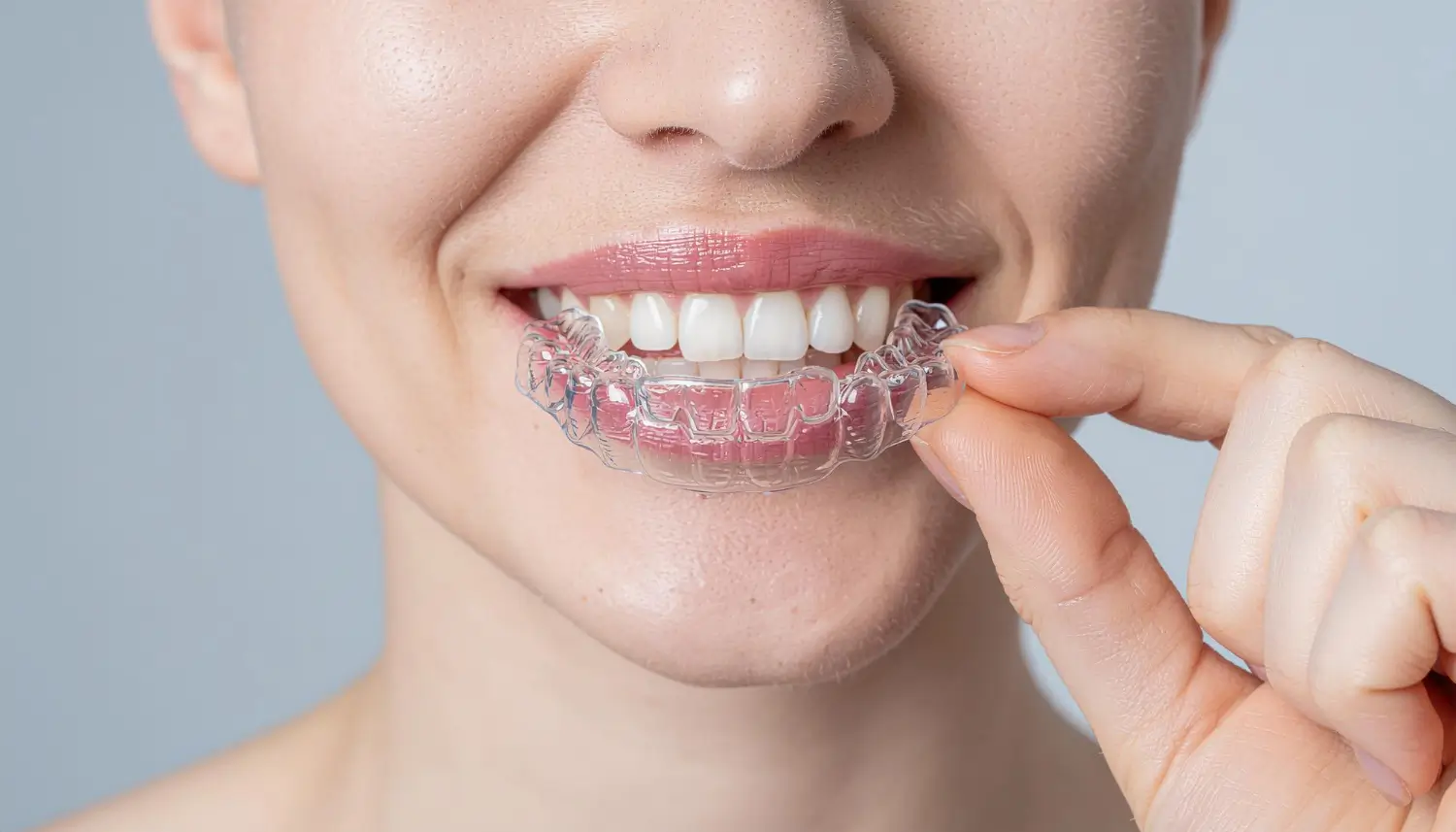
There are different retainer options in retention treatment. Clear removable retainers are custom-made appliances that fit over the teeth and resemble clear aligners. They are removed while eating and worn for the period set by the orthodontist.
A fixed retainer, on the other hand, usually consists of a thin wire bonded to the inner surface of the front teeth. It is invisible from the outside and cannot be removed by the patient. Because it is always in the mouth, there is less risk of forgetting to wear it; however, the area around it needs to be cleaned carefully.
In some patients, conventional removable appliances made of acrylic and metal wire may also be used. Each system has different advantages and care requirements. For this reason, the choice of retainer should be based on biomechanical needs, not only on aesthetic expectations.
How Long Should a Retainer Be Worn?
The duration of retainer wear is not the same for every patient. The appliance may be worn for longer periods in the early phase of treatment, with a switch to night-time wear only later on. The frequency of wear should only be reduced after the orthodontist’s check-ups.
Because teeth have the potential to move throughout life, long-term night-time wear may be recommended for many patients. If patients stop wearing their retainer on their own, this can lead to changes such as crowding, especially in the lower front teeth, or old gaps reopening.
What Should You Do If Your Retainer No Longer Fits?
A removable retainer that has not been worn for a long time may feel tight when it is put back in. This may indicate that the teeth have started to move slightly. If the appliance does not fit at all, causes pain or has to be forced into place, the patient should not try to fix the problem on their own.
An orthodontic check-up is also needed if a fixed retainer comes loose from a tooth, if the wire breaks or if movement of the teeth is noticed. Limited movements detected early can sometimes be managed with a new retainer or a short series of additional aligners. More noticeable changes may require a new digital scan and a limited orthodontic correction.
How Do We Plan the Retention Phase at Dentram?
At the end of clear aligner treatment at Dentram, the alignment of the teeth, root positions, bite relationship and treatment goals are re-evaluated. Personalised retainers are prepared to match the final position captured with a digital intraoral scan. The retention protocol is determined by taking into account the patient’s risk of relapse and the biomechanical movements carried out during treatment. At check-ups, the fit of the retainer, the bonding of fixed wires, oral hygiene and the position of the teeth are monitored.
Preserving the result achieved after clear aligner treatment is possible with regular retainer wear and orthodontic check-ups. If your retainer no longer fits or you notice your teeth moving again, you can book an assessment appointment with Dentram’s orthodontists.