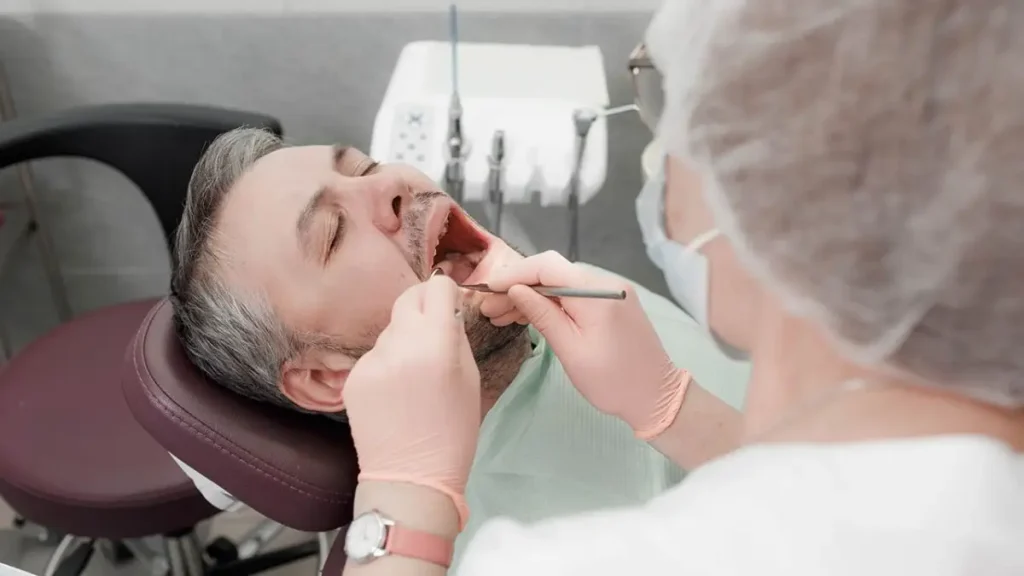
When tooth decay is neglected, in cases of advanced gum disease, or as a result of structural trauma, bacterial infections can develop in teeth that have lost their vitality. When this condition progresses to the jawbone, it is commonly referred to as an abscessed or infected tooth. One of the most common and medically unfounded beliefs about this condition is that “an infected tooth should not be touched,” “it should be extracted after taking antibiotics for a long time,” or “a tooth cannot be extracted until the abscess has subsided.”
In modern oral and maxillofacial surgery and biological dentistry, the approach to an abscessed or infected tooth that has been determined to require extraction is clear, analytical, and intervention-focused.
Can an Abscessed or Infected Tooth Be Extracted? Should You Wait or Extract It?
If a tooth that needs to be extracted presents with an abscess or infection, prescribing antibiotics and waiting for the infection to subside is not a rational medical approach. On the contrary, the source of the infection is the tooth itself.
The rule in modern dentistry is clear: The priority is to eliminate the source of the infection. This can be achieved through tooth extraction or root canal treatment.
Antibiotics cannot eliminate the bacteria or the source of decay inside a necrotic tooth; they can only temporarily suppress the spread of the infection throughout the body. Therefore, the definitive treatment is to extract the causative tooth without delay and drain the abscess accumulated in the area. Antibiotic treatment is not intended to postpone this surgical intervention; rather, after the tooth has been extracted and the abscess drained, antibiotics may be used to support the process when deemed necessary by the dentist.
Is the Belief That “An Infected Tooth Should Not Be Extracted” True?
In previous years, the main scientific reason for avoiding intervention on abscessed teeth was that the acidic environment in infected tissues could reduce the effectiveness of the local anesthetic solutions used at the time. This could cause patients to experience pain during the procedure.
However, advances in pharmacology and surgical techniques have eliminated this obstacle. Thanks to advanced local anesthetic agents and regional anesthesia techniques, abscessed and infected teeth can be extracted comfortably and safely, with effective pain control.
Prof. Dr. Serhat Yalçın, a founder of Dentram and a specialist in Oral, Dental and Maxillofacial Surgery, describes the risks created by the “wait and see” approach to abscessed teeth and the correct intervention protocol as follows:
“Unfortunately, the deeply rooted belief that ‘a tooth should not be extracted until the infection has subsided’ can cause our patients to endure severe pain for days and allow the infection in the jawbone to spread to much larger areas. In a biological and surgical approach, the fundamental principle is to rapidly eliminate the source of the infection, namely the ‘focal point,’ from the body. If an abscessed tooth has been determined to require extraction, extracting the tooth at that time and draining the abscess in the area is the only definitive solution that can relieve the patient. Giving antibiotics first and waiting only prolongs the process. Our surgical protocol is to first eliminate the source, clean the abscess, and then support the process with antibiotics when necessary.”
Do Not Delay Treatment: Find a Rational Solution with Dentram!
A dental abscess is not a condition that heals on its own or simply disappears over time. Delaying a dental appointment with the thought that “the tooth is infected, so the dentist cannot extract it now” can lead to greater bone loss in the jaw, severe facial swelling, and systemic infections that may threaten overall health.
At Dentram clinics, abscessed and infected teeth can be treated on the same day using advanced surgical principles and the latest anesthesia techniques, allowing the source of the infection to be safely eliminated. Instead of suffering from pain for days, you can contact our experienced team for a rational and prompt surgical solution.